Showing posts with label oucs205. Show all posts

Monday, 30 April 2012

Research :: Dissertation


Feminism and Social Change: Suggested Readings

Websites , forums , previous studies and info for Research ... 

http://www.awid.org/

http://www.forum.awid.org/

http://www.politicalforum.com/womens-rights/

http://userpages.umbc.edu/~korenman/wmst/socialchange.html

http://www.unb.ca/par-l/win/feminmethod.htm

http://www.ic.arizona.edu/ic/mcbride/ws200/theproblemoffeminisminfemaleart.html

http://www.jennygilmore.com.au/files/2112/4061/8028/PHD.pdf
http://happyfeminist.typepad.com/happyfeminist/2006/08/is_feminism_a_s.html

http://www.socresonline.org.uk/1/4/brayfield.html

http://www.encyclopedia.chicagohistory.org/pages/444.html

http://www.socialistworker.co.uk/art.php?id=14315

http://www.colorado.edu/AmStudies/lewis/2010/feminism.htm

Design for social change :: Dissertation seminar 1

Research


Your topic must have about 4 different sections in it , so look at the topic from different angles throughout the piece of writing.
investigate into 4 different angles e.g Topic :: Women Power - Feminist, Semiotic , Sexism , Rights , politic views, history etc

Methodology  - Feminist / Semiotic . Psychoanalytical / marxist / ecology / postcolonial / narratology etc

Start off with secondary sources - Find as many of the following as you can - this will suggest your primary research (trips to library , scouring internet)
Secondary Sources - Books / Topic / Approach / Primary Research

Primary research gives you more marks - Must do your primary research - anything that you analyse (logos , clothing etc)
Primary Research - Interviews / art objects - your own person investigations of primary research / Designers / empirical study - Evidence gained through observation , Archives - Foundations


 Design for social change


Design that wants to change something or be political - Design Activism in political changes.
A graphic designer creating a brand for a product , a consumer commodity , that act of branding is political as it is exploiting a political change an 'act of design' e.g Swvorski diamonds - the trade and what went into getting diamonds - ALL DESIGN/ART IS A POLITICAL STATEMENT OR CHANGE.
So all design for social change aims to change situations like this

RELATIONS OF PRODUCTION
( all froms of art reflect) :: superstructure / Base - creates a falseness in view on social change ...

Men have control over the mass media - the superstructure of men dominate the base of the forces of production - women usual are the object of beauty and men are the consumer of this. This creates a situation when the majority of the society think ' thats how its always been , so its right'  - 'DIALECTICAL MATERIALISM'
Again - all design for social change aims to change situations like this.

For this topic , you need to understand IDEOLOGY
- can be a set of personal beliefs 'what i believe in , and what politics believe in' And some religions have their own set of ideology.
Take one statement or idea of an designer or artist and take questions from this e.g
VICTOR PAPANEK -CAME UP WITH AN IDEA OF A SOCIAL TITHE - DO SPEN 1 HOUR IN TEN OF SOMETHING TO CHANGE THE WORLD = 10%


Books & Sources 
L.BALDNIN - 'VISUAL COMMUNICATION : FROM THEORY TO PRACTICE'
N . KLEIN - 'NO LOGO' 
VICTOR PAPANEK - 'DESIGN FOR THE REAL WORLD' 

Saturday, 28 April 2012

Subjects & Themes :: Dissertation :: CTS

Over the past couple of days i have been thinking about what interests me so that i can find some kind of base point for my Dissertation Research.
I also need some idea of what i want to look at so that i can select the appropriate theme sign up sessions which will tie in to my chosen subject. 

Some potential areas of re-search 
- Gender equality 
- Different Cultural views on female rights
- Hierarchy of men over women 
- Sexism 
- Power Strategy 
- Iconic Figures
- History e.g women not being allowed to be creative or act and how thats changed


The subject which is standing out to me the most at this time is Power strategy and iconic figures. 
So i have been thinking more deeply into these subject and how i can find something which combines the two.

I very passionate about women power and how this world is dominated by men. So i think at the moment   my re-search will be based around Women Power. 

This has lead me to select the following seminars wich will hopefully be appropriate for this subject. 

- Design and Social Change
- Globalisation 
- Design for Accessibility 

Thinking about possible Dissertation Titles within these themes. 

Design and Social Change
- 60'S / 70/S 
- Feminist views
- Superstructure / Base

Globalisation 
-
-
-

Design for Accessibility
-
-
-


FEEDBACK -
Focus on one era.
one chapter be about the history - but include both negative and positive views on feminism. 60'S / 70'S - BIG MOVEMENT EMERGED IN FEMALES VIEWS AND RIGHTS

Thursday, 26 April 2012

Dissertation Briefing :: Lecture One

Choose something that you really want to discuss , what your interested in , this will carry you through the whole process.
Ideally it will feed into my studio practise / finals etc or Carrier path.

Look at a breadth of sources , visited exhibitions , books , magazines , websites , films , communicating withe people i.e letters , e-mails etc.
Research over the summer in any way you want , sources can be anything , digitally or physically.
It is marked on academic coverstaions , not just your opinion.

To enter the Dissertation Handbook.....


Do the majority of your Research in advance as this will help in the organisation and ensure you are prepared for actually starting to write, it will take so much longer to research as you go along.

Do a little bit a day.

Fill in Proposal form. Do a draft first

Dissertation Briefing :: Dissertation


Monday, 26 March 2012

Task 4 - Hyperreality

Write a short analysis (300 words approx) of an aspect of our culture that is in some way Hyperreal. Hyperreality is an awkward and slippery concept. Wikipedia defines it as follows-

Hyperreality is used in semiotics and postmodern philosophy to describe a hypothetical inability of consciousness to distinguish reality from a simulation of reality, especially in technologically advanced post-modern societies. Hyperreality is a way of characterizing what our consciousness defines as "real" in a world where a multitude of media can radically shape and filter an original event or experience. 

Wikipedia cites the following examples to get you thinking (but please come up with your own!)

Monday, 23 January 2012

ESSAY FINAL


How the Correct Balance and Level of Marketing Strategy can Ultimately Create Brand Power?

INTRODUCTION 

I am choosing to analyse a  luxury brands marketing strategy who I am very much interested in, and also the area of Graphic Design that I have covered in previous module tasks; fashion branding. Therefore this essay will cover how the rise of Louis Vuitton has been brought about through the correct marketing mix in relation to the four P's (Price, Promotion, Place and Product). I will also compare how Louis Vuitton's marketing strategy compares to that of a general consumer goods marketing strategy, by showing principles that Louis Vuitton applies to its marketing mix in order to achieve brand power. This will be done by separating the essay into four sections which will cover all of the four p's and analysing each one individually (Paul. A. Willax, 1985). 
Ultimately from my findings i will hopefully show how by the correct usage and balance of the four p's brand power can be created and maintained.
The reason why I have chose my case study to revolve around Louis Vuitton can be seen in figure 1 below, showing the statistics for top brands;


(Figure 1 showing stats for the top 10 fashion brands, taken from a report on Top 100 Brandz by Millward Brown found on)

As you can see from the above table , Louis Vuitton has more than double the brand value of its next competitor, Hermes. Therefore it shows that Louis Vuitton has complete brand power when it comes down to the top 100 brands from across the world. 

Price

The first part of the marketing mix that I will cover will be 'Price'. For general consumer goods the market often demands 'low pricing' this is to make the consumer happy and more susceptible to choose to buy that brand. Obviously Louis Vuitton prices its products  very high in relation to general consumer goods. In order for them to then justify the price deference between a general consumer product and a luxury consumer product, comes down to the value for money and the quality of the item purchased. 
The first of the principles that I have researched are therefore related to pricing and how they maintain their brand power through methods relating to pricing. 
The first principle that Louis Vuitton applies to their brands is that they do not do bargain sales on any of their products. Louis Vuitton has evidently not once reduced its prices in the whole 154 years of its business history. The reason why this is the case can only come down to the commitment that Louis Vuitton has on quality within its products, and also the pricing strategy that Louis Vuitton holds in making sure that all of the customers buy the products at the same price. 
Another principle that can be said about Louis Vuitton products are that they are equivalent to money due to the high trade-in price. Due to the high quality that Louis Vuitton puts into their products, even when the products are recycled the price does not drop. This means that if customers are to purchase the products then at least the price will not drop dramatically and again they will get excellent value for money. 
The last principle that Louis Vuitton adopts within its pricing its products, is they do not conduct surprise price changes. When conducting my research I found that over the past 25 years Louis Vuitton has raised prices 14 times and only lowered them 11 times (Paul-Gerard Pasols, Lenora Ammon, 2005). This highlights the fact that Louis Vuitton does not like to change their prices at the drop of a hat, unlike companies selling general consumer goods. Furthermore if they do plan on a price change customers who are listed on the customer register are informed prior, and also advertisements are put up at store fronts indicating this in advance. Again these are all methods in which Louis Vuitton earns customer trust and loyalty through its pricing strategy. 

Promotion

The second marketing mix that I will now discuss 'Promotion'. The general consumer goods brands strategy is mainly to mass advertise, this is a means to try and get themselves out there as much as possible in an effort to sell at high volume. Certain methods that these companies will therefore use will be such things as television adverts, Louis Vuitton however does not use this method of advertisement. Instead Louis Vuitton uses such methods as newspapers or magazines to advertise themselves, this method normally consists of just an image aswell as appose to lots of wording and sales gargon. This again stems back to the brand of Louis Vuitton being able to sell itself rather than the advertisement trying to sell it. 
Within Louis Vuitton's advertisement strategy they emphasis on publicity, this is done through the above method mentioned; magazines  and newspapers, more so than other luxury brands do. Yet again this is a tradition that Louis Vuitton has stuck to since the beginning and will continue to adhere to. Another method of how Louis Vuitton can gain mass media converge is by holding very extravagant parties. These parties are held at precisely the right calculated timing as part of a promotional strategy. By inviting celebrities to these events creates them to become a hot topic within the media and therefore promoting Louis Vuitton in a none direct way. So in a relation to the cost of direct advertising i.e TV adverts, this method far out weights it. 

Place

The third 'p' in the marketing mix is 'Place', this can be also described as where the product is distributed to for its point of sale. General consumer goods generally look for broad distribution channels selling through non-department store to try and get as much volume retail as possible. This can be seen on the flip side with Louis Vuitton as they only offer their products through limited distribution channels. It may be seen that Louis Vuitton have created a method in which they can sell their products through controlled channels and not channels that they can not control. By using these controlled methods means that Louis Vuitton can make sure that their products are sold to the correct target market at the correct price and location. This will also try to limit any counterfeit products that may find there way into the system from using un-controlled routes. 


(Figure 2 taken from the Louis Vuitton website http://www.louisvuitton.co.uk)


(Figure 3 taken from Louis Vuitton website http://www.louisvuitton.co.uk)

The above two figures show where Louis Vuitton stores are situated around the world, as you can see the number of stores in relation to general consumer goods stores is a lot less. As my research for a general consumer store, such as Topshop, indicated with Topshop having over 300 stores in the UK alone. This again supports how general consumer goods stores attempt to get as much mass volume sales as possible by selling through any channel possible. 
Further research that I have conducted has discovered that for luxury brands to succeed internationally they need to be successful in the market over in Japan; this is down to a large proportion of sales predominantly being achieved in Japan (Uché Okonkwo, 2007). Mostly all of Louis Vuitton's stores are located in prime locations, this is again part of their marketing strategy as to generate a huge profit from their products. This is down to the reasoning that brands do not open stores in prime locations when they have made a huge profit, this is a pre-determined decision in order to make a huge profit (Clay Andres et al, 2004). This can be seen when looking back up at Figure 1 showing the top 10 brands, with Louis Vuitton being at the top of the table with a brand value of 24 billion, ultimately showing complete brand power. 

Product

The last marketing ingredient is obviously now 'Product'. The first statement that I can make about 'product' is that it most general consumer goods companies seek to achieve 'adequate product quality'. This is brought about by Louis Vuitton's quality control, making sure that their products are all 'fit for purpose and comply with the job they are required for'. Were Louis Vuitton obviously differs from that of general consumer goods, is that it strives for 'absolute quality' with all its products, and does not just stop at 'adequate quality'. Why all companies can not achieve this is down to cost,  by paying as much attention to detail as Louis Vuitton does and finishing the products with as much quality as they do comes with a price. So therefore by raising both the quality and attention to detail prompts consumers to insist on either having a Louis Vuitton item or nothing. This also can relate to a social element that is triggered from Luxury Brands, 'Luxury brands are aspiring brands that trigger many social signals, such as success, wealth, sophistication…' (Kaled K. Hameide, 2011). This statement is then furthering the suggestion that luxury brands are somewhat different to general consumer goods, and also targeted at a separate target market than that of general consumer goods.
In order for Louis Vuitton to maintain brand power it has to apply certain principles for its products. The first principle that they follow and adopt is the need to try and eliminate all the products that are a counterfeit. The need for Louis Vuitton to adopt this principle is to ensure they protect the brand itself. This is a massive threat to Louis Vuitton, however they manage to police this issue of counterfeit products in a number of ways; 
1) registration of its designs and trademarks, they have evolved their designs in such a way that makes it very difficult to forge.
2) Distribution of warning notices; if companies are fund to be selling counterfeit Louis Vuitton products they issue them with warning notices. 
Another principle that Louis Vuitton adopts within their products, among other Luxury brands, is that they do not produce outlet products. Although again this increases the price for production, it pays off when considering the cost of maintaining brand power/value. 
Louis Vuitton also only produces products with a name specific to that product, they will not let a product leave the manufacturing stage without having a unique name, these being names that have been copied form lakes or even mountains. This is to enable the end user to form an attachment to the product, again this is not seen with general consumer products. This is reflected in consumer behaviour studies that have been carried out on luxury brand customers, showing that the regular customers develop a strong relationship to the products. The relationship they develop with these products can be so powerful that in times of need they are often not the first thing that they give up. So for example in times of economic crisis, these devote customers would much rather sell their car in order to keep hold of these products (Kaled K. Hameide, 2011). 

Conclusion

So by concluding all my findings around the marketing mix for Louis Vuitton (Place, Promotion, Price, Product) I can make the statement that Louis Vuitton has definitely had the correct strategy when it comes down to each element individually; in order to achieve ultimate brand power. From the research that I conducted into the market strategy and lectures that I attended, I can see the absolute importance to be able to address each one to the precise level that Louis Vuitton has. I can also see the outstanding difference between that of a general consumer goods market strategy and that of a luxury brands market strategy. In order to be a market leader and also have undoubtable brand power the marketing mix is an essential part of the market strategy when rangeing from tasks from as little as changing the price of an item to promoting the opening of a new store. With the ability to get this balance absolute precise and to the correct detail may require lots of background research not only into the market but also the customers to whom the product is aimed at; but ultimately with the correct approach and delivery of the strategy, it evidentially has the potential to be a Billion Dollar strategy.

References

1) Paul. A. Willax (1985). The Four "P's" of Marketing: product price promotion place. U.S.A: Empire of America Federal Savings Baank. 1-8.
2) Millward Brown (2011). Top 100 Brandz Most Valuable Global Brands.
3) Paul-Gerard Pasols, Lenora Ammon. (2005). Louis Vuitton (Firm) - History. In: Louis Vuitton: the birth of modern Luxury. London: Harry N. Abrams. 464-487.
4) Louis Vuitton. Store Locator. Available: http://www.louisvuitton.co.uk/front/#/eng_GB/Stores/Store-Locator. Last accessed 20th Jan 2012.
5) Topshop. (2011). About Us. Available: http://www.topshop.com/webapp/wcs/stores/servlet/StaticPageDisplay?storeId=12556&catalogId=33057&identifier=ts2-about-us&intcmpid=W_FOOTER_WK39_HP_UK_ABOUT_US. Last accessed 20th Jan 2012
6) Uché Okonkwo. (2007). Digital Luxury. In: Luxury fashion branding: trends, tactics, techniques. UK: Palgrave Macmillan. 202-203.
7) Clay Andres et al. (2004). Brand Recognition. In: Pat Matson Identity Design Sourcebook. China: Rockport Publishers. 110-125.
8) Kaled K. Hameide. (2011). Luxury Fashion Brands. In: Olga T. Kontzias Fashion Branding Unraveled. New York: Fairchild Books. 109-155.
9) Giles Lury (1998). BRAND WATCHING , lifting the lid on branding. 2nd ed. Ireland / USA: Blackhall Publishing. 63-70.

Sunday, 22 January 2012

Visual Research for Essey

I took a visit to one of the stores, and wow the prices of the accessories were astonishing. The simple , sophisticated interior of the shop reflected the products and brand as a whole, i felt very intimidated , the looks i got from the staff were not nice! I was unable to get photographs inside the store.

The official Luis Vuitton store in Leeds....


The prestige festive shop window...


Luis Vuitton accesories are also sold in Harvey Nichols in Leeds city centre


Friday, 20 January 2012

Essay Draft 2


How the Correct Balance and Level of Marketing Strategy can Ultimately Create Brand Power?

INTRODUCTION 

I am choosing to analyse a brands marketing strategy that i am very much interested in and also the area of Graphic Design that i have covered in previous module tasks;fashion branding. Therefor this essay will cover how the rise of Louis Vuitton has been brought about through the correct marketing mix in relation to the four P's (Price,promotion,place and product). I will also compare how Louis Vuitton marketing strategy compares to that of general consumer goods, by showing principles that Louis Vuitton applies to its marketing mix. This will be done by further separating this essay into the four p's themselves and analysing each one individually. 
Ultimately from my findings i will hopefully show how by the correct usage and balance of the four p's brand power can be created.
The reason why i have chose my case study to revolve around Louis Vuitton can be seen in figure 1 below, showing the statistics for top brands.


(Figure 1 showing stats for the top 10 fashion brands…………………………………………)

As you can see from the above table , Louis Vuitton has more than double the brand value of its next competitor, Hermes.

Price

The first part of the marketing mix then is Price. For general consumer goods the market often demands 'low pricing' this is to make the consumer happy and more susceptible to choose to buy that brand. Obviously Louis Vuitton prices its products  very high in relation to general consumer goods. In order to then justify the price deference between a general consumer product and a luxury consumer product it comes down to the value for money and again the quality. 
The first of the principles that i have researched are therefore related to pricing and how they maintain there brand power through methods relating to pricing. 
The first principle that Louis Vuitton apply to their brands is that they do not do bargain sales on any of their products. Louis Vuitton has evidently not once reduced its prices in the whole 154 years of its business history. The reason why this is the case can only come down to the commitment that Louis Vuitton has on quality within its products, and also the pricing strategy that Louis Vuitton holds in making sure that all of the customers buy the products at the same price. 
Another principle that can be said about Louis Vuitton products are that they are equivalent to money due to the high trade-in price. Due to the high quality that Louis Vuitton put into their products, even when the products are recycled the price does not collapse. This means that if customers are to purchase the products then at least the price will not drop dramatically and again they will get excellent value for money. 
The last principle that Louis Vuitton adopts within its pricing is they do not conduct surprise price changes. Research shows that over the past 25 years Louis Vuitton has raised prices 14 times and only lowered them 11 times. This highlights the fact that Louis Vuitton does not like to change their prices at the drop of a hat, unlike companies selling general consumer goods. Furthermore if they do plan on a price change customers who are listed on the customer register are informed prior, and also advertisements are put up at store fronts indicating this in advance. Again these are all methods in which Louis Vuitton earns customer trust and loyalty through its pricing strategy. 

Promotion

The second marketing mix that I will now discuss 'Promotion', the general consumer goods brands strategy is mainly to mass advertise, this is a means to try and get themselves out there as much as possible in an effort to sell at high volume. Certain methods that these companies will therefore use will be such things as television adverts, Louis Vuitton however do not use this method of advertisement. Instead Louis Vuitton uses such methods as newspapers or magazines to advertise themselves, this method normally consists of just an image swell as appose to lots of wording and sales gargon. This again stems back to the brand of Louis Vuitton being able to sell itself rather than the advertisement trying to sell it. 
Within Louis Vuitton's advertisement strategy they emphasis on publicity, this is done through the above mentioned; magazines  and newspapers, more so than other luxury brands do so. Yet again this is a tradition that Louis Vuitton has stuck to since the beginning and will continue to adhere to. Another method of how Louis Vuitton can gain mass media converge is by holding very extravagant parties. These parties are held at precisely the right calculated timing as part of a promotional strategy. By inviting celebrities to these events creates them to become a hot topic within the media and therefore promoting Louis Vuitton in a none direct way. So in a relation to the cost of direct advertising, this method far out weights it. 

Place

The third 'p' in the marketing mix is Place, this can be also described as where the product is distributed to for point of sale. General consumer goods generally look for broad distribution channels selling through non-department store departments to try and get as much volume retail as possible. This can be seen on the flip side with Louis Vuitton as they only offer their products through limited distribution channels. It may be seen that Louis Vuitton have created a method in which they can sell their products through controlled channels and not channels that can not be controlled. By means of controlled methods this means that Louis Vuitton can make sure that their products are sold to the correct target market at the correct price and location. This will also try to limit any counterfeit products that may find there way into the system from using un-controlled routes. 


(Figure 2 taken from the Louis Vuitton website)

(Figure 3 taken from Louis Vuitton website)

The above two figures show where Louis Vuitton stores are situated around the world, as you can see the number of stores in relation to general consumer goods stores is a lot less. As my research for a general consumer store such as Topshop indicated with Topshop having over 300 stores in the UK alone. This again supports how general consumer goods stores attempt to get as much volume as possible by selling through any channel possible. 
Further research that I have conducted has discovered that for luxury brands to succeed internationally they need to be successful in the market over in Japan; this is down to a large proportion of sales predominantly being achieved in Japan. Mostly all of Louis Vuitton's stores are located in prime locations, this is again part of their marketing strategy as to generate a huge profit from their products. This is down to the reasoning that brands do not open stores in prime locations when they have made a huge profit, this is a pre-determined decision in order to make a huge profit. This can be seen when looking back up at Figure 1 showing the top 10 brands, with Louis Vuitton being at the top of the table with a brand value of 24 billion, ultimately showing complete brand power. 

Product

The last marketing ingredient is obviously product. The first statement that i must make about 'product' is that it must seek 'adequate product quality'. This is brought about by Louis Vuitton's quality control, making sure that their products are all 'fit for purpose and comply with the job they are required for'. Were Louis Vuitton obviously differs from that of general consumer goods, is that it strives for 'absolute quality' with all its products, and does not just stop at 'adequate quality'. Why all companies can not achieve this is down to costs,  by paying as much attention to detail as Louis Vuitton does and finishing the products with as much quality as they do comes with a price. So therefore by raising both the quality and attention to detail prompts consumers to insist on either having a Louis Vuitton item or nothing. This also can relate to a social element that is triggered from Luxury Brands, 'Luxury brands are aspiring brands that trigger many social signals, such as success, wealth, sophistication and so on' (Kaled K. Hameide 2011). This statement is then furthering the suggestion that luxury brands are somewhat different to general consumer goods, and also targeted at a separate target market than that of general consumer goods.
In order for Louis Vuitton to maintain brand power it has to apply certain principles for its products. The first principle that they follow and adopt is the need to try and eliminate all the products that are a counterfeit. The need for Louis Vuitton to adopt this principle is to ensure they protect the brand itself. Louis Vuitton manages to police this issue of counterfeiting in a number of ways; 
1) registration of its designs and trademarks, they have evolved their designs in such a way that makes it very difficult to forge.
2) Distribution of warning notices; if companies are fund to be selling counterfeit Louis Vuitton products they issue them with warning notices. 
Another principle that Louis Vuitton adopt within their products, among other Luxury brands, is that they do not produce outlet products. Although again this increases the price for production, it pays off when considering the cost of maintaining brand power/value. 
Louis Vuitton also only produces products with a name, they will not let product leave the manufacturing stage without having a unique name, this being names that have been copied form lakes or even mountains. This is to enable the end user to form an attachment to the product, again this is not seen with general consumer products. This is reflected in consumer behaviour studies that have been carried out on luxury brand customers, showing that the regular customers develop a strong relationship to the products. The relationship they develop with these products can be so powerful that in times of need they are often not the first thing that they give up. So for example in times of economic crisis, these devote customers would much rather sell their car in order to keep hold of these products (Kaled K. Hameide 2011)

Conclusion

So by concluding all my findings around the marketing mix for Louis Vuitton (Place, Promotion, Price, Product) I can make the statement that Louis Vuitton has definitely had the correct strategy when it comes down to each element individually; in order to achieve ultimate brand power. From the research that I conducted into the market strategy I can see the absolute importance to be able to address each one to the precise level that Louis Vuitton has. I can also see the outstanding difference between that of a general consumer goods market strategy and that of a luxury brands market strategy. In order to be a market leader and also have undoubtable brand power the marketing mix is an essential part of the market strategy when ranging from tasks from as little as changing the price of an item to promoting the opening of a new store. With the ability to get this balance absolute precise and to the correct detail may require lots of background research not only into the market but also the consumer market; but ultimately with the correct approach it has the potential to be a Billion dollar strategy.

Essay Draft One


How the correct marketing strategy can create brand power.

INTRODUCTION 

I am choosing to analyse a brands marketing strategy that i am very much interested in and also the area of Graphic Design that i have covered in previous module tasks;fashion branding. Therefor this essay will cover how the rise of luis vuitonne has been brought about through the correct marketing mix in relation to the four P's (Price,promotion,place and product). I will also compare how luis vuitons marketing strategy compares to that of general consumer goods, by showing principles that Louis Vuitton applies to its marketing mix. This will be done by further separating this essay into the four p's themselves and analysing each one individually. 
Ultimatley from my findings i will hopefully show how by the correct usage and balance of the four p's brand power can be created.
The reason why i have chose my case study to revolve around Louis Vuitton can be seen in figure 1 below, showing the statistics for top brands.


(Figure 1 showing stats for the top 10 fashion brands…………………………………………)

As you can see from the above table , Louis Vuitton has more than double the brand value of its next competitor, Hermes.

Price

The first part of the marketing mix then is Price. For general consumer goods the market often demands 'low pricing' this is to make the consumer happy and more suseptable to choose to buy that brand. Obviously Louis Vuitton prices its products  very high in relation to general consumer goods. In order to then justify the price deference between a general consumer product and a luxury consumer product it comes down to the value for money and again the quality. 
The first of the principles that i have researched are therefore related to pricing and how they maintain there brand power through methods relating to pricing. 
The first principle that Louis Vuitton apply to their brands is that they do not do bargain sales on any of their products. Louis Vuitton has evidently not once reduced its prices in the whole 154 years of its business history. The reason why this is the case can only come down to the commitment that Louis Vuitton has on quality within its products, and also the pricing strategy that Louis Vuitton holds in making sure that all of the customers buy the products at the same price. 
Another principle that can be said about Louis Vuitton products are that they are equivalent to money due to the high trade-in price. Due to the high quality that Louis Vuitton put into their products, even when the products are recycled the price does not collapse. This means that if customers are to purchase the products then at least the price will not drop dramatically and again they will get excellent value for money. 
The last principle that Louis Vuitton adopts within its pricing is they do not conduct surprise price changes. Research shows that over the past 25 years Louis Vuitton has raised prices 14 times and only lowered them 11 times. This highlights the fact that Louis Vuitton does not like to change their prices at the drop of a hat, unlike companies selling general consumer goods. Furthermore if they do plan on a price change customers who are listed on the customer register are informed prior, and also advertisements are put up at store fronts indicating this in advance. Again these are all methods in which Louis Vuitton earns customer trust and loyalty through its pricing strategy. 

Promotion

The second marketing mix that I will now discuss 'Promotion', the general consumer goods brands strategy is mainly to mass advertise, this is a means to try and get themselves out there as much as possible in an effort to sell at high volume. Certain methods that these companies will therefore use will be such things as television adverts, Louis Vuitton however do not use this method of advertisement. Instead Louis Vuitton uses such methods as newspapers or magazines to advertise themselves, this method normally consists of just an image swell as appose to lots of wording and sales gargon. This again stems back to the brand of Louis Vuitton being able to sell itself rather than the advertisement trying to sell it. 
Within Louis Vuittons advertisement strategy they emphasis on publicity, this is done through the above mentioned; magazines  and newspapers, more so than other luxury brands do so. Yet again this is a tradition that Louis Vuitton has stuck to since the beginning and will continue to adhere to. Another method of how Louis Vuitton can gain mass media converge is by holding very extravagant parties. These parties are held at precisely the right calculated timing as part of a promotional strategy. By inviting celebrities to these events creates them to become a hot topic within the media and therefore promoting Louis Vuitton in a none direct way. So in a relation to the cost of direct advertising, this method far out weights it. 

Place

The third 'p' in the marketing mix is Place, this can be also described as where the product is distributed to for point of sale. General consumer goods generally look for broad distribution channels selling through non-department store departments to try and get as much volume retail as possible. This can be seen on the flip side with Louis Vuitton as they only offer their products through limited distribution channels. It may be seen that Louis Vuitton have created a method in which they can sell their products through controlled channels and not channels that can not be controlled. By means of controlled methods this means that Louis Vuitton can make sure that their products are sold to the correct target market at the correct price and location. This will also try to limit any counterfeit products that may find there way into the system from using un-controlled routes. 


(Figure 2 taken from the Louis Vuitton website)

(Figure 3 taken from Louis Vuitton website)

The above two figures show where Louis Vuitton stores are situated around the world, as you can see the number of stores in relation to general consumer goods stores is a lot less. As my research for a general consumer store such as topshop indicated with Topshop having over 300 stores in the UK alone. This again supports how general consumer goods stores attempt to get as much volume as possible by selling through any channel possible. 
Further research that I have conducted has discovered that for luxury brands to succeed internationally they need to be successful in the market over in Japan; this is down to a large proportion of sales predominantly being achieved in Japan. Mostly all of Louis Vuittons stores are located in prime locations, this is again part of their marketing strategy as to generate a huge profit from their products. This is down to the reasoning that brands do not open stores in prime locations when they have made a huge profit, this is a pre-determined decision in order to make a huge profit. This can be seen when looking back up at Figure 1 showing the top 10 brands, with Louis Vuitton being at the top of the table with a brand value of 24 billion, ultimately showing complete brand power. 

Product

The last marketing ingredient is obviously product. The first statement that i must make about 'product' is that it must seek 'adequate product quality'. This is brought about by Louis Vuitton's quality control, making sure that their products are all 'fit for purpose and comply with the job they are required for'. Were Louis Vuitton obviously differs from that of general consumer goods, is that it strives for 'absolute quality' with all its products, and does not just stop at 'adequate quality'. Why all companies can not achieve this is down to costs,  by paying as much attention to detail as Louis Vuitton does and finishing the products with as much quality as they do comes with a price. So therefore by raising both the quality and attention to detail prompts consumers to insist on either having a Louis Vuitton item or nothing. This also can relate to a social element that is triggered from Luxury Brands, 'Luxury brands are aspiring brands that trigger many social signals, such as success, wealth, sophistication and so on' (Kaled K. Hameide 2011). This statement is then furthering the suggestion that luxury brands are somewhat different to general consumer goods, and also targeted at a separate target market than that of general consumer goods.
In order for Louis Vuitton to maintain brand power it has to apply certain principles for its products. The first principle that they follow and adopt is the need to try and eliminate all the products that are a counterfeit. The need for Louis Vuitton to adopt this principle is to ensure they protect the brand itself. Louis Vuitton manages to police this issue of counterfeiting in a number of ways; 
1) registration of its designs and trademarks, they have evolved their designs in such a way that makes it very difficult to forge.
2) Distribution of warning notices; if companies are fund to be selling counterfeit Louis Vuitton products they issue them with warning notices. 
Another principle that Louis Vuitton adopt within their products, among other Luxury brands, is that they do not produce outlet products. Although again this increases the price for production, it pays off when considering the cost of maintaining brand power/value. 
Louis Vuitton also only produces products with a name, they will not let product leave the manufacturing stage without having a unique name, this being names that have been copied form lakes or even mountains. This is to enable the end user to form an attachment to the product, again this is not seen with general consumer products. This is reflected in consumer behaviour studies that have been carried out on luxury brand customers, showing that the regular customers develop a strong relationship to the products. The relationship they develop with these products can be so powerful that in times of need they are often not the first thing that they give up. So for example in times of economic crisis, these devote customers would much rather sell their car in order to keep hold of these products (Kaled K. Hameide 2011)

Conclusion

So by concluding all my findings around the marketing mix for Louis Vuitton (Place, Promotion, Price, Product) I can make the statement that Louis Vuitton has definitely had the correct strategy when it comes down to each element individually; in order to achieve ultimate brand power. From the research that I conducted into the market strategy I can see the absolute importance to be able to address each one to the precise level that Louis Vuitton has. I can also see the outstanding difference between that of a general consumer goods market strategy and that of a luxury brands market strategy. In order to be a market leader and also have undoubtable brand power the marketing mix is an essential part of the market strategy when ranging from tasks from as little as changing the price of an item to promoting the opening of a new store. With the ability to get this balance absolute precise and to the correct detail may require lots of background research not only into the market but also the consumer market; but ultimately with the correct approach it has the potential to be a Billion dollar strategy.

Thursday, 5 January 2012

Essay Proposal


I am going to study the four P's: (Price, Product, Promotion and Place) of the marketing mix, focusing on the branding , identity and product of the famous luxury brand 'Louis Vuitton' against general consumer goods brands; and how they achieve brand power.

Title-


How the Correct Balance and Level of Marketing Strategy can Ultimately Create Brand Power?


References-

1) Paul. A. Willax (1985). The Four "P's" of Marketing: product price promotion place. U.S.A: Empire of America Federal Savings Baank. 1-8.
2) Millward Brown (2011). Top 100 Brandz Most Valuable Global Brands.
3) Paul-Gerard Pasols, Lenora Ammon. (2005). Louis Vuitton (Firm) - History. In: Louis Vuitton: the birth of modern Luxury. London: Harry N. Abrams. 464-487.
4) Louis Vuitton. Store Locator. Available: http://www.louisvuitton.co.uk/front/#/eng_GB/Stores/Store-Locator. Last accessed 20th Jan 2012.
5) Topshop. (2011). About Us. Available: http://www.topshop.com/webapp/wcs/stores/servlet/StaticPageDisplay?storeId=12556&catalogId=33057&identifier=ts2-about-us&intcmpid=W_FOOTER_WK39_HP_UK_ABOUT_US. Last accessed 20th Jan 2012
6) Uché Okonkwo. (2007). Digital Luxury. In: Luxury fashion branding: trends, tactics, techniques. UK: Palgrave Macmillan. 202-203.
7) Clay Andres et al. (2004). Brand Recognition. In: Pat Matson Identity Design Sourcebook. China: Rockport Publishers. 110-125.
8) Kaled K. Hameide. (2011). Luxury Fashion Brands. In: Olga T. Kontzias Fashion Branding Unraveled. New York: Fairchild Books. 109-155.

Monday, 7 November 2011

The Work of Art in the Age of Mechanical Reproduction Walter Benjamin TASK AND SEMINAR

NOTES


Task 2

Before this lecture i had never heard of Milton Glaser but without realising i was fully aware of his work, the 'I Love New York' Text Design, this infamous piece of design is one of the most famous pieces of text and is recognised by the public world wide. 
It has become New York's trademark promotion logo and is used for the the citys souvenirs and brochures throughout the state. Glasers design is ripped of, sold and distributed to small shops , markets, retail stores, designer brands and printed onto a wide range products in not only America but all over the world. "Mechanical reproduction simply means copies, copies that extend beyond the aural setting or ritual within which the art/image was originally displayed"

Since designing the logo in the mid 1970's, Milton Glaser has been helping many businesses re-value and improve the three magic letters of their company , USP (unique selling point), although this is benefiting the retail industry  from small boutiques and shops to luxury brands , it is De-valuing the logo which had in tern lost its uniqueness itself. 

In Walter Benjamins essay 'The work of Art in The Age of Mechanical Reporiduction' , Benjamin talks about the universal equality of things and how mechanical reproduction destroys aura , in this case the 'I Love New York' trademark. However this is not a necessarily a bad thing , i found a video of Glasers opinion of the reproduction of his logo and how it has been overly re-used until this day .“I did the bloody thing in 1975 and I thought it would last a couple of months as a promotion and disappear.” Glaser talks about how shocked he was that his simple icon design became so widely recognised and appreciated, he also expresses how it is a 'great thing' to have happened and how he doesn't have a problem with the mechanical reproduction of his design. Glaser also states that he does not know why it has become so used , but of course its the brilliance of its minimalistic style and how well it has been considered in terms of communicating a message in its simplest form using type , American Typewriter. 
The plump red heart and the American inspired black type sit so well together even though they contrasts , which is very rare in terms of design. In my opinion the reason why it is used so much 'mostly for selling products that promote the city' is because its communicating such a warm and positive energy about New York , using a rebus 'the heart' to portray the feeling of love, which in turn encourages people to experience the city themselves and buy 'I Love New York' merchandise during their trip. 

In my opinion , the iconic design has been used too often and has lost its unique appeal, the icon is most famous for being printed onto unisex white t-shirts , and it was always a tourists desire to purchase one during their visit to New York , however the t-shirt can now be purchased in many countries , including England where i purchased mine from. This is just one example of how re-production of art and designs can DE value it dramatically “the authenticity... is jeopardized by reproduction”.


CTS LECTURE - TECHNOLOGY        -       REPRODUCTION       -       VALUE 
                                   photography
                                   new techniques

W.BENJAMIN - The work of art in the ago of mechanical reproduction , 1936.

In pairs of two , analyse and explain a section in the peice of writing that has been given, SECTION 5 AND 6. 

V
Works of art are received and valued on different planes. Two polar types stand out; with one, the accent
is on the cult value; with the other, on the exhibition value of the work. Artistic production begins with
ceremonial objects destined to serve in a cult. One may assume that what mattered was their existence,
not their being on view. The elk portrayed by the man of the Stone Age on the walls of his cave was
an instrument of magic. He did expose it to his fellow men, but in the main it was meant for the spirits.
Today the cult value would seem to demand that the work of art remain hidden. Certain statues of gods are
accessible only to the priest in the cella; certain Madonnas remain covered nearly all year round; certain
sculptures on medieval cathedrals are invisible to the spectator on ground level. With the emancipation of
the various art practices from ritual go increasing opportunities for the exhibition of their products. It is
easier to exhibit a portrait bust that can be sent here and there than to exhibit the statue of a divinity that
has its fixed place in the interior of a temple. The same holds for the painting as against the mosaic or
fresco that preceded it. And even though the public presentability of a mass originally may have been just
as great as that of a symphony, the latter originated at the moment when its public presentability promised
to surpass that of the mass.
With the different methods of technical reproduction of a work of art, its fitness for exhibition increased to
such an extent that the quantitative shift between its two poles turned into a qualitative transformation of
Walter Benjamin  The Work of Art in the Age. . .its nature. This is comparable to the situation of the work of art in prehistoric times when, by the absolute
emphasis on its cult value, it was, first and foremost, an instrument of magic. Only later did it come to be
recognized as a work of art. In the same way today, by the absolute emphasis on its exhibition value the
work of art becomes a creation with entirely new functions, among which the one we are conscious of, the
artistic function, later may be recognized as incidental. This much is certain: today photography and the
film are the most serviceable exemplifications of this new function.


VI
In photography, exhibition value begins to displace cult value all along the line. But cult value does not give
way without resistance. It retires into an ultimate retrenchment: the human countenance. It is no accident
that the portrait was the focal point of early photography. The cult of remembrance of loved ones, absent
or dead, offers a last refuse for the cult value of the picture. For the last time the aura emanates from the
early photographs in the fleeting expression of a human face. This is what constitutes their melancholy,
incomparable beauty. But as man withdraws from the photographic image, the exhibition value for the
first time shows its superiority to the ritual value. To have pinpointed this new stage constitutes the
incomparable significance of Atget
13
, who, around 1900, took photographs of deserted Paris streets. It
has quite justly been said of him that he photographed them like scenes of crime. The scene of a crime,
too, is deserted; it is photographed for the purpose of establishing evidence. With Atget, photographs
become standard evidence for historical occurrences, and acquire a hidden political significance. They
demand a specific kind of approach; free-floating contemplation is not appropriate to them. They stir the
viewer; he feels challenged by them in a new way. At the same time picture magazines begin to put up
signposts for him, right ones or wrong ones, no matter. For the first time, captions have become obligatory.
And it is clear that they have an altogether different character than the title of a painting. The directives
which the captions give to those looking at pictures in illustrated magazines soon become even more
explicit and more imperative in the film where the meaning of each single picture appears to be prescribed
by the sequence of all preceding one


V – The Magic of Art: Cult and Exhibition Value
One of art’s functions is its value: its “cult value” and its “exhibition value.”
•    Cult:  Originally, art was meant to be magical and hidden from the outside world, a “magical” projection of early man’s inner aspirations.
•    Exhibition: Modern “emancipation” of art has increased the chances for it to be on public display as means for profit and economy.
The shift between original “cult value” and modern “exhibition value” has thus transformed the overall quality of the art produced.
VI – The Portrait and Photograph
Exhibition value outweighs cult value only in early portraits.
•    Portraits from centuries ago maintain a “melancholy” aura about them.
•    Photographs do help with understanding historical events but don’t require the “free-floating contemplation” that a painting might invoke.

Monday, 31 October 2011

TASK NO1

CHOOSE SOME ASPECT OF SOCIETY TODAY THAT IS AN EXAMPLE OF PANTOPTISISM - A SHORT BIT OF WRITING - CRITICAL , USE TECHNICAL TERMINOLOGY 


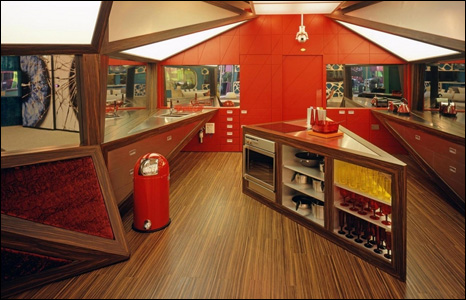
A barefaced example of panoptisism in society today is the popular television franchise Big Brother. It is a reality show where a group of individuals spend a certain amount of weeks , sleeping , eating and taking part in tasks together under the same roof, isolated from the outside world but constantly viewed by the public eye. 

The brilliant element of the programme is that the people who are put into the house are complete strangers and their relationship is monitored by TV editors 24hours a day by live cameras situated around the house ,which is also broad casted on live television. This in turn makes it so blatant to the housemates that they are being watched. This makes the contestants play up and act differently so that they become liked by the public so that they will then win the show 'or the money!'‘power relations have an immediate hold upon it [the body]; they invest it, mark it, train it, torture it, force it to carry out tasks, to perform ceremonies, to emit signs’ (Foucault 1975)

The fact that the individuals are strangers to each other is so entertaining as they do not always see eye to eye, this is when popularity and statuses evolve of the housemates by the public , who decide which person will be evicted from the house each week. 
I find it so interesting how people become so judged and categorised by a nation of people who don't actually know them, big brother can make or break you , a perfect example of this is the status of a former celebrity 'Jade Goodey' who was made into a celebrity , loved by the British public from entering the house in 2003, until 2007 when she re-entered the big brother house which then put her into an unfavourable light on accusations of being racist whilst her time in the house. 

Constantly being watched form a self regulation within the housemates , it emotionally and physically changes the them throughout the programme, which is what makes the simple reality of it so popular. This relates to Faucaults view on the INSTITUTIONAL GAZE - the idea of an institution to the prisoners, being watched by 'people' as oppose to 'one person' which in turn makes you act as though the law institution wants you to act, how society has coded you to act.  Being constantly watched effects the contestants and persuades them into being someone there not so that they don't get evicted , which then effects their relationships in the house as it create a competitive attitude amongst them. This relates to the section where Faucault talks about the prisoner constantly being watched and how this effects them, Foucault calls this a 'Docile Body;, somebody who wont resist, somebody who will be trained and forced to act a certain way which is what Disciplinary Society produces , in this case , the production team of big brother and the public eye - 'RELATIONSHIP BETWEEN POWER, KNOWLEDGE AND THE BODY' 

The layout of the big brother has panoptitism written all over it! The house is surrounded by a barbed wired fence , is under 24hour surveillance and the housemates are forbidden to leave the house unless evicted. Which has all the same elements of a Panopticon which is a circular building , under constant surveillance , surrounded by an outer wall, containing occupants (for example, inmates in a prison). This layout design of both the big brother house and a Panopticon both open plan which makes it very easy to be monitored and extremely hard to escape view of the higher power , in my example the higher power being the public eye and television editors'.

"power is not a thing or a capacity people have – 
it is a relation between different individuals and groups, and only exists when it is being exercised"


CTS SEMINAR ONE - PANOPTISISM


CTS 
SEMINAR ONE

THE UNKNOWN IS MUCH MORE THREATENING 


PANOPTISM , Relies on surveillance 
PANOPTICON MAKES YOU CONFORM- Jeremy bentham designed this prison in 1791, he was an architect , could have been the layout for anything, hospital, school , prison? you are totally isolated , lack of contact with others, make you chance mentally very quickly. lit from the windows, makes the prisoners constantly on display, being watched and visibly to the unknown, the prisoners conform to the idea that someone may or may not be watching you, so you start controlling you re behavior by yourself- SELF REGULATION
the prisoners are visible but unverifiable.
POWER IS A REGULATION - The ruling class of society 'the hierarchy of individuals e.g. feminism, business statuses' Faucault believes the people with power , only have power because they enter themselves into that role/situation , and the people that are getting rules are letting it happen, and exploiting themselves into being on a lower level, e.g we are the students , being ruled by the higher individual , our lecturer , because we are letting him teach us. however , there is always a possibility that we can resist, but as a human we don't always realize this, control is all about people letting others control them by choice, and this is not always obvious to the less powerful. 
question to ask yourself -
WHY AM I BEING CONTROLLED? 
WHO AM I DONG THIS FOR?
WHAT AM I DOING?
a key feature of the prison is that the people watching have to be NOT VISIBLE , especially to the prisoners, and the prisoners have to be VISIBLE at all times, without this it would not work!
Building designed very well!!!
Michel Foucault ' a french philosopher ' was interested in the panopticon not because of its physical form , but because it was like a metaphor for how society was controlled, interested in what the panopticon reflected 'a control through peoples mind' 

ANOTHER KEY POINT - The panopticon also controlls and watched the prison guards, one big circle, an example of this is out lecturers are being watched as well as the students , where theres power there is always resistance !!

1970'S a switch from.....
PHYSICAL CONTROL(an irrational way) -----> MENTAL CONTROL (a more human way)

MODERN DISCIPLINARY SOCIETY 
it is more effective to try and make/persuade people behave than to try and force/push people to behave

THE PANOPTICON, trains you to change you re ways, change and twist you re mind, it is PRODUCTIVE in the way that it phsycalogical focuses the prisoners into becoming a better behaved individual, correcting a person into behaving the way in which you want them to, 
As oppose to a regular prison where it just keep the criminal locked away so they cannot commit a crime again. In turn the individual continues to be a criminal, but they are hidden away and prevented from committing a crime again. 

INSTITUTIONAL GAZE - the idea of an institution to the prisoners, being watched by 'people' as oppose to 'one person' which in turn makes you act as though the law institution wants you to act, how society has coded you to act. 

A DOCILE BODY - "one that may be subjected, used, transformed, and improved. and that this docile body can only be achieved through strict regiment of disciplinary acts"
Foucault argues that we cannot choose to enter modern society; we are controlled utterly by it through it technologies of power

EXAMPLES OF PANOPTISISM - 
*fake cctv cameras on houses to put off burglars 'visible , but you never know if it is recording - a fake threat'
*neighborhood watch - close houses and villages 
*gardeners , do not do it for themselves although they think they are , but they want to impress others in the village , they are not aware of this. 
*